Alvin Miller
Day of the DeadAlvin Miller is the Pima County Sheriff’s Department fingerprint technician whose practical expertise makes a crucial difference in the Vail homicide investigation. He began in the department’s Latent Fingerprint Lab as a sixteen-year-old volunteer and became the youngest person in the country to qualify fully as a technician with the Automated Fingerprint Identification System. When a hurriedly returned collection of crime-scene evidence overwhelmed the lab, Miller volunteered his help, worked through the backlog himself, and found a fingerprint match that gave detectives a new route into the case.
Identity and Training
Miller was forty years old and had spent more than half his life working for the Pima County Sheriff’s Department. His career began with an Eagle Scout volunteer project at the Latent Fingerprint Lab when he was sixteen; rather than moving on after the project, he stayed. His professional standing came less from formal academic credentials than from sustained practice: he had only a few community-college credits, while his training and most of his education came through hands-on work.
That practical apprenticeship led him to an unusually early qualification. Miller became the youngest person in the country to achieve full technician status on the Automated Fingerprint Identification System. His expertise was therefore both institutional and self-forged: built inside the department’s laboratory over many years, and grounded in the careful manipulation and interpretation of physical evidence.
Position in the Department
Miller’s loyalty to Sheriff Walker was well known. When William Forsythe took over as sheriff, the new administration did not dismiss Miller outright, but tried to pressure him into leaving by cutting the fingerprint lab’s budget and staffing. The strategy did not work as intended. Miller responded by putting in still more hours, including unpaid time, rather than abandoning the lab.
The standoff made his value difficult to ignore. Even Forsythe could see that losing Miller’s expertise would be a serious blow. The episode establishes the tension between institutional decisions that weaken forensic capacity and the technician whose commitment keeps the work going despite those reductions. Miller’s loyalty is not presented as a matter of rank or convenience; it is visible in the extra labor he takes on to preserve the lab’s ability to process evidence.
Work on the Vail Homicide
Late one evening, a crime-scene unit returned to the department with dishes, silverware, and other items connected to Saturday’s Vail homicide. They had arrived too late to be processed during the previous shift. The next day, Sally was alone with a large backlog and had already received two calls from Detective Brian Fellows asking whether the evidence had been worked. Miller offered to come in and help.
He was glad to return to the work, and still felt a strong personal investment in the AFIS equipment. Even though his staff was trained, he trusted his own fingerprint enhancements most. After arriving, putting on his lab jacket, and checking the materials out of the evidence room, he chose to start with the presumed murder weapon, a machete. The evidence log placed it in a kitchen sink, soaking in soapy water. The soap had removed some blood from the joint between handle and blade and from the handle’s decorative carvings, but the machete yielded no usable fingerprints.
The plates and silverware were more promising. Miller dusted them carefully and lifted what appeared to be two nearly perfect sets of prints. He then spent close to two hours enhancing the lines and whorls by hand so the images sent to the machine would be as clear as possible. His method moved deliberately from physical object, to lifted impression, to improved image; each step was meant to make the eventual comparison more reliable.
Identification and Narrative Role
Miller first compared the prints with those of the booked suspect. The suspect’s fingerprints appeared on both sets of dishes, suggesting that he had served the meal and cleared up afterward. Miller set those known prints aside and concentrated on the unknown ones. If they belonged to the victim and were already in the system, he reasoned, they could identify her before the medical examiner did. Knowing who had died would give the detectives an earlier chance to determine who was responsible.
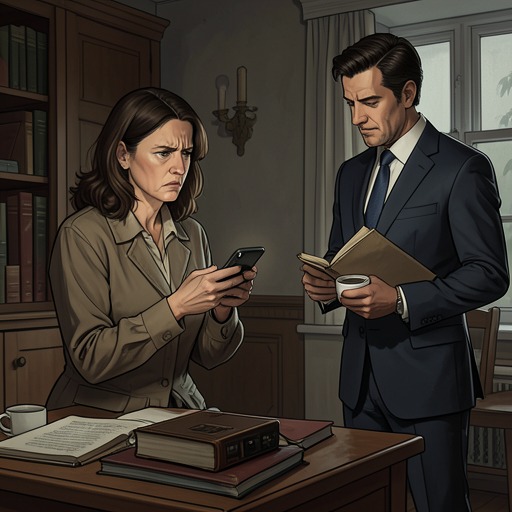
It was nearly noon before he considered the second set ready for the AFIS machine to copy and transmit. While the computer processed the images, Miller returned to his desk and took a sip of cold coffee. Sally then called him back with the result: there had been a hit. His immediate response was to insist that Detective Brian Fellows be contacted at once.
The work displays Miller’s characteristic combination of precision and instruction. He works, talks, and teaches at the same time, a habit that helps explain why people trained in his lab remain in demand after they leave it. In the Vail investigation, that methodical competence converts ordinary tableware into evidence with investigative force. The machete, despite its apparent importance as the presumed weapon, produces no usable prints; the less conspicuous plates and silverware yield the match. Miller’s contribution is the patient labor that recognizes the difference and makes the unknown prints legible to the system.